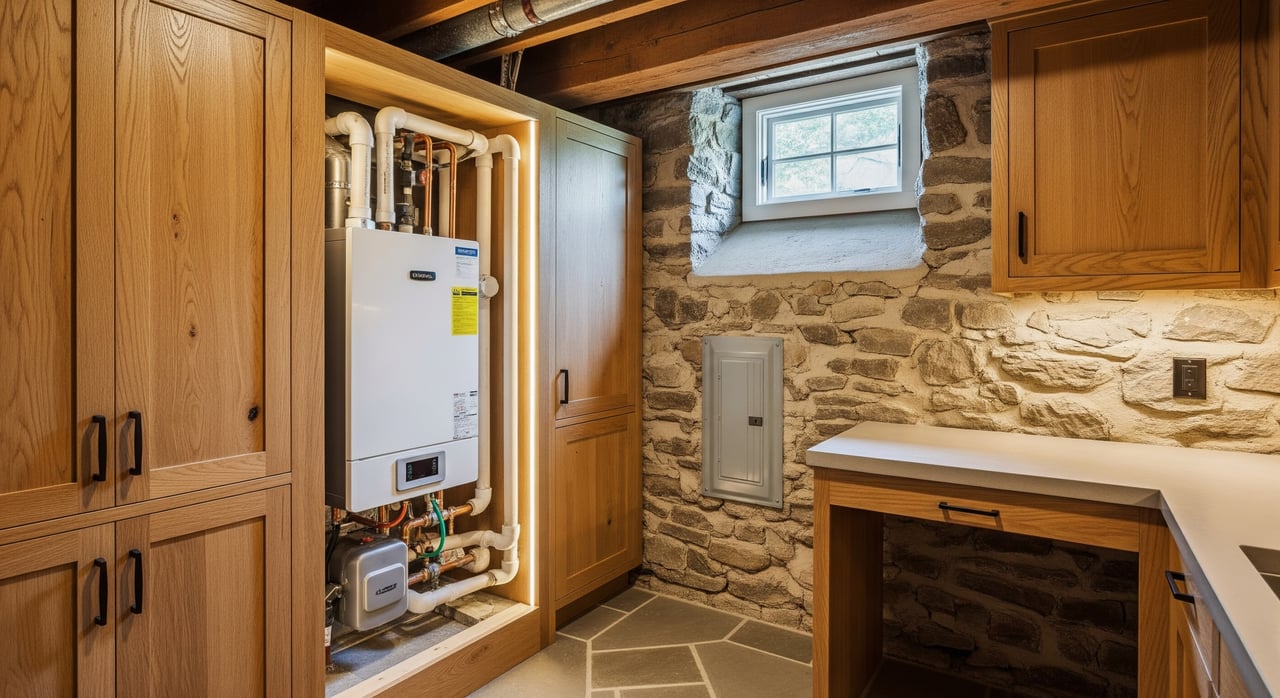
Thinking about replacing your water heater in Mariemont or Terrace Park? If you want lower energy bills without sacrificing comfort, a heat pump water heater can be a smart upgrade. You just need to know how it works in a basement, what permits and incentives apply, and the basics of installation. This guide gives you clear answers so you can plan with confidence. Let’s dive in.
How heat pump water heaters work
Heat pump water heaters move heat from the surrounding air into the tank instead of making heat directly. That design can make them two to three times more efficient than standard electric tanks. ENERGY STAR notes that many integrated models reach UEF ratings around 3.3 to 4.0, which signals strong efficiency in real homes. You will still get reliable hot water, just with less electricity used than a typical electric tank. Learn how UEF ratings work.
In most U.S. climates, the Department of Energy finds that heat pump water heaters deliver solid lifecycle savings. Your results depend on how much hot water you use, local electric rates, and where the unit sits in the home. DOE’s guidance on heat pump water heaters explains these trade-offs in plain terms.
Are Mariemont and Terrace Park basements a good fit?
Basements in Mariemont and Terrace Park often work well for heat pump water heaters. The key is making sure the space meets the unit’s temperature and air volume needs, and that you manage sound and condensate correctly.
Temperature and space
Most modern models are designed to operate when the surrounding air stays roughly between 40 and 120 degrees Fahrenheit. Many basements in our area meet that range, but cooler or very tight rooms may need a different approach. Manufacturers and ENERGY STAR also call for adequate air volume, typically several hundred cubic feet, or you can use ducting if the room is small. See ENERGY STAR’s design considerations.
Noise and comfort
Typical sound levels for ENERGY STAR heat pump water heaters are about 45 to 55 dBA, similar to a dishwasher. You may notice a light hum and a subtle cooling effect in the immediate area. Avoid placing the unit right next to sleeping spaces if you are sensitive to noise. Review ENERGY STAR’s FAQ on noise and placement.
Condensate and drainage
These units produce condensate as they run, which must drain to a floor drain or a suitable connection. If you do not have a nearby drain, you will need a small condensate pump or added plumbing. Your installer will size and route this correctly based on the model and code requirements.
Flood risk and elevation
If your basement has any flood history or sits in a mapped flood zone, elevate the water heater or relocate it, per building science and FEMA guidance. Elevating above the expected flood level protects the equipment and can be required by code in some areas. See best practices for elevating water heaters.
Permits and inspections in Hamilton County
In Hamilton County, a plumbing permit and inspection are required for new or replacement water heaters. Do not skip this step. Homeowners or contractors should pull the permit and schedule the inspection with Hamilton County Public Health. Review the county’s permit guidance.
If your property is in the Village of Mariemont, the Building Department provides local approvals and coordinates with outside inspection agencies for electrical and plumbing reviews. Terrace Park homeowners should confirm requirements with the village or county before work begins. Visit Mariemont’s Building Department page.
Incentives and tax credits you can use
Duke Energy Ohio offers rebates for qualifying ENERGY STAR heat pump water heaters. As of the latest program update, examples include up to 500 dollars for certain 50-gallon models that meet UEF 3.3 and up to 800 dollars for certain 80-gallon models. Program terms can change, so confirm current eligibility and steps on the utility’s site. Check Duke Energy’s HPWH rebate program.
A federal tax credit has also been available for qualifying ENERGY STAR heat pump water heaters. Under the Energy Efficient Home Improvement credit, the benefit can be up to 30 percent of project cost, subject to a 2,000 dollar annual cap for heat pumps and heat pump water heaters combined. Verify current IRS and ENERGY STAR rules when you plan your project. See ENERGY STAR’s federal tax credit page.
Costs, payback, and what affects your savings
Typical installed costs often range from about 2,000 to 5,000 dollars, which includes the unit, labor, and any electrical or condensate work. The low end assumes a straightforward swap, and the high end covers more complex sites or panel upgrades.
Your payback depends on a few key drivers:
- Your current water heater type and age
- Household hot water use and schedules
- Basement temperature and room volume
- Your electric rate and whether you enroll in any utility programs
- Rebates and the federal tax credit
Duke Energy’s example materials cite potential energy bill savings up to about 400 dollars per year for qualifying customers, depending on usage and local rates. Explore Duke’s program page for current details.
Installation checklist before you buy
Use this quick list to prep your space and your scope of work. A qualified installer will verify each item.
- Ambient temperature and air volume meet the model’s minimums, or plan for ducting as needed. See ENERGY STAR design guidance.
- Condensate drainage is available, or specify a condensate pump and routing.
- Electrical capacity is adequate. Many models need a dedicated 240-volt circuit. Some 120-volt options exist but may have lower UEF.
- Access and clearances are workable for delivery and service.
- Noise sensitivity is considered if bedrooms are nearby. Review ENERGY STAR’s noise FAQ.
Sizing and maintenance basics
Choose tank size based on your household’s peak hot water demand and the unit’s First Hour Rating. Common sizes are 50 and 80 gallons, and larger tanks are often recommended when replacing gas units because recovery is different.
Plan for simple upkeep. Clean the air filter as directed, check the condensate drain, and flush the tank periodically if your water is hard. With proper maintenance, many heat pump water heaters can last about 10 to 15 years. Keep your service records for warranty support.
For buyers and sellers in Mariemont and Terrace Park
If you are selling and already have a heat pump water heater, gather the model number, UEF, installation date, permits, and any rebate documentation. This helps buyers understand the home’s operating costs and value.
If you are buying, ask whether the basement is conditioned or unconditioned, how condensate is handled, and whether the unit participates in any utility programs. Confirm that required permits and inspections were completed with Hamilton County and, if applicable, the village. Start with the county’s permit page.
Ready to plan improvements before you list or to evaluate a home you love? Reach out to the local team that knows these neighborhoods and building details. Connect with Megan Stacey for clear, neighborly guidance.
FAQs
Will a heat pump water heater work in a Mariemont or Terrace Park basement?
- Often yes if the space stays roughly 40 to 120 degrees Fahrenheit and has enough air volume, or if you use ducting per the model’s manual. See ENERGY STAR’s design notes.
How loud is a heat pump water heater in a basement?
- Many ENERGY STAR models run around 45 to 55 dBA, similar to a dishwasher, so avoid placing the unit next to bedrooms if you are sensitive to sound. Review the noise FAQ.
Do I need an electrical panel upgrade for a heat pump water heater?
- Possibly. Many units require a dedicated 240-volt circuit and sufficient panel capacity, so have an electrician assess your panel as part of the quote.
What rebates and tax credits are available locally?
- Duke Energy Ohio lists rebates for qualifying 50- and 80-gallon ENERGY STAR models, and a federal tax credit of up to 30 percent with a 2,000 dollar annual cap may apply. Check Duke’s rebate page and ENERGY STAR’s tax credit page.
How does a heat pump water heater affect winter heating in the home?
- It removes a small amount of heat from the surrounding air, which can slightly increase space-heating demand in some homes, yet overall annual savings still tend to be favorable in many cases. See DOE’s overview.
What should I do if my basement has flood risk?
- Elevate the water heater or relocate it above expected flood levels, and follow local code and best practices to protect equipment. See the elevation guide.